Szczecin, Rzeszów and Białystok lead the ranking of mid-sized cities for logistics and industry. Accolade publishes the "Beyond the Hubs" report
Szczecin, Rzeszów and Białystok took the top three spots in the "Beyond the Hubs" ranking, developed on the initiative of investor Accolade in cooperation with REDD and Michael Page. The report identifies mid-sized Polish cities that stand out for their potential to support logistics, warehousing and manufacturing. The findings show that regional locations are increasingly moving beyond their traditional role as satellites of major hubs and are now being assessed as standalone points on companies' operational maps.
Poland's logistics and industrial real estate market is entering a phase of more distributed growth. For years, investor and tenant activity was concentrated around the largest metropolitan areas and key transport corridors. Today, regional cities are gaining momentum: well-connected, cost-competitive, with a solid labour base and room for further business expansion.
The "Beyond the Hubs" report was created to structure knowledge about mid-sized cities and identify those locations with particularly strong conditions for logistics, warehousing and manufacturing operations. The analysis covered cities with populations between roughly 100,000 and 400,000, located outside Poland's largest logistics hubs and major warehousing agglomerations.
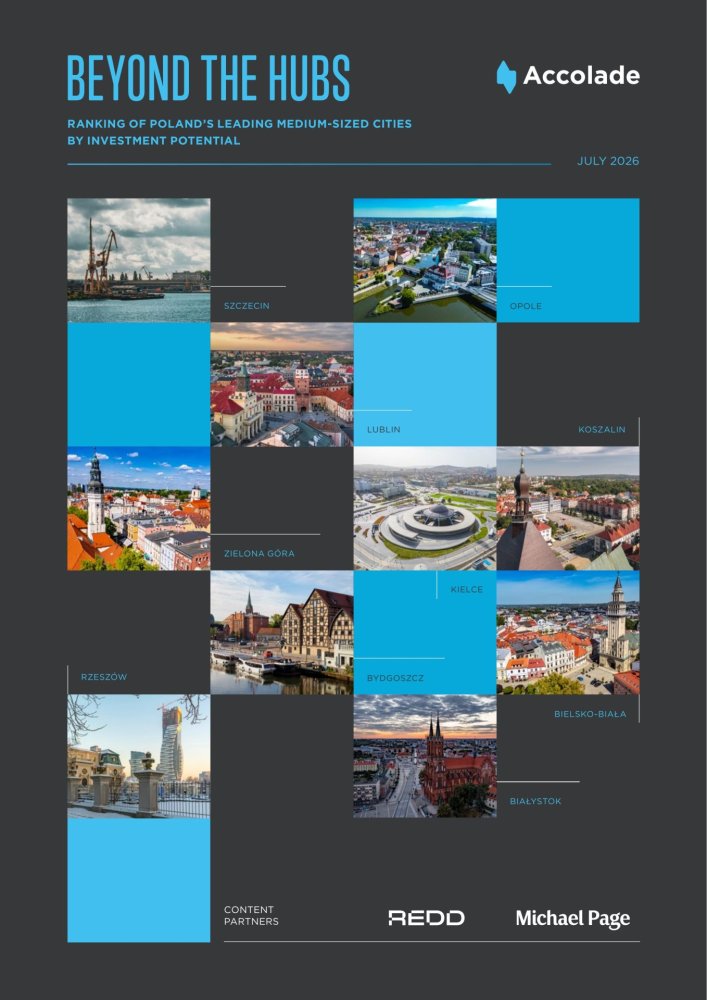
The top ten includes: Szczecin, Rzeszów, Białystok, Zielona Góra, Lublin, Bydgoszcz, Opole, Kielce, Bielsko-Biała and Koszalin.
"The growth of mid-sized cities is no longer a side effect of the main logistics markets. These are increasingly locations that companies evaluate strategically — through the lens of labour availability, operating costs, scalability, and proximity to customers and suppliers. At Accolade, this is a direction we have observed and supported since we entered Poland. For years, we have invested beyond the largest agglomerations, developing modern industrial and logistics infrastructure in locations that not long ago were not an obvious choice for many companies. 'Beyond the Hubs' shows that the potential of these cities is no longer just an investor's intuition — it can now be captured in data," says Joanna Sinkiewicz, Managing Director of Accolade in Poland.
Labour market: regional advantage goes beyond lower costs
The report is complemented by a qualitative labour market perspective prepared in cooperation with Michael Page. The analysis covered workforce availability, wage pressure, the competitiveness of regional labour markets and the talent potential for logistics and manufacturing operations.
"The attractiveness of these cities must be assessed through the lens of each investor's specific operating model. Different locations suit light manufacturing and warehousing, others support advanced technical processes, and still others are best for regional logistics, distribution or serving foreign markets. Regional advantage is no longer limited to lower labour costs. Access to technical skills, workforce relocation potential, infrastructure quality, automation readiness and a city's ability to retain talent over the long term are becoming increasingly important," says Marta Kozak, Senior Executive Manager, Michael Page.
Ranking leaders: Szczecin, Rzeszów and Białystok
Szczecin took first place with a score of 7.77. The city combines access to seaports, proximity to the German market and well-developed logistics infrastructure. As a result, it is one of the key centres serving international trade, cross-border logistics and Baltic Sea supply chains. Its position is further reinforced by its manufacturing sector, offshore activity and maritime economy.
Rzeszów came second with a score of 7.07. The city stands out for its strong industrial base, technical expertise and growing importance in the nearshoring context. Key assets include the advanced manufacturing ecosystem developed around Aviation Valley, as well as its strategic location along the Via Carpatia route toward Ukraine.
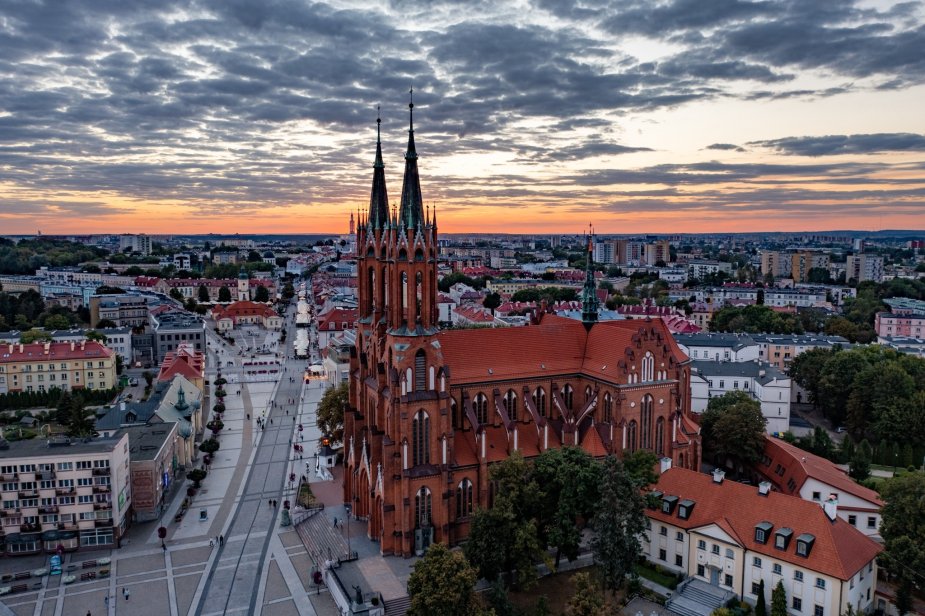
Białystok ranked third with a score of 6.06. As the largest economic centre in north-eastern Poland, it is steadily strengthening its position as a location for logistics, distribution and industrial activity. The city combines solid economic fundamentals with a warehouse market that still has room to grow.
Data increasingly central to location decisions
REDD partnered on the report as the provider of warehouse market data. According to REDD's experts, mid-sized city development requires more granular analysis than the traditional view of major warehouse regions.
"Poland's warehouse market has become more complex and more selective. Decisions to enter a given location can no longer rely solely on historical trends or a region's general reputation. What is needed is data showing actual space availability, vacancy rates, tenant activity and dynamics at the level of specific cities — and often individual buildings and modules. This is particularly important in developing markets, where the situation can shift faster than traditional quarterly reports would suggest," says Krzysztof Foks, Head of Research, REDD.
Top 10 highlights different models of regional potential
The remaining rankings show that mid-sized city potential does not follow a single pattern. Zielona Góra (#4) benefits from its proximity to the German market and western Poland's role as a manufacturing and export base. Lublin (#5) combines strong economic and academic potential with room for further warehouse market growth. Bydgoszcz (#6) stands out for its stable business environment, market maturity and location supporting distribution across northern Poland.
The ranking also includes Opole (#7), benefiting from its position between Wrocław, Silesia and the German market; Kielce (#8), functioning as a natural distribution point for south-central Poland; Bielsko-Biała (#9), built on industrial expertise and a base for advanced manufacturing; and Koszalin (#10), with potential to develop as a regional business and logistics hub in Central Pomerania.
Cities on the radar: Gorzów Wielkopolski, Częstochowa and Toruń
The experts also flagged locations worth watching in the coming years. Gorzów Wielkopolski may strengthen its position as a centre supporting cross-border activity and service of the German market. Częstochowa benefits from proximity to southern Poland's strong industrial base and could appeal to manufacturing and logistics operators. Toruń can gradually reinforce its position thanks to its favourable location along the north–south transport axis and its complementary economic relationship with Bydgoszcz.

Report methodology
The "Beyond the Hubs" report was developed to identify mid-sized Polish cities that stand out for their potential to support logistics, warehousing and manufacturing operations.
The ranking model is based on three pillars:
- economic potential - including labour market conditions, wage levels and business activity,
- warehouse market activity - reflecting the scale and significance of the local logistics and industrial real estate market,
- market maturity and operational significance - capturing the city's role in national supply chains and how firmly it is established on the map of logistics and industrial investment.
Within the model, economic data accounted for 55% of the final score, the warehouse real estate market for 30%, and market maturity for 15%. The report was developed in cooperation with REDD and Michael Page.